From the 1700s, during the Great Northern War, Norway fought alongside Russia, Denmark and Poland against Sweden, which at the time was known for occupying territory belonging to both Norway and Denmark. Sweden was considered the principal threat throughout the 1500s. During the Tsarist period, beginning with the 1826 border agreement and lasting until the First World War, the boundary between Russia and Norway was formally established. Between 1925 and the outbreak of the Second World War, however, disagreements persisted regarding the Norwegian–Finnish–Russian border, which were ultimately settled through an agreement signed in 1933.
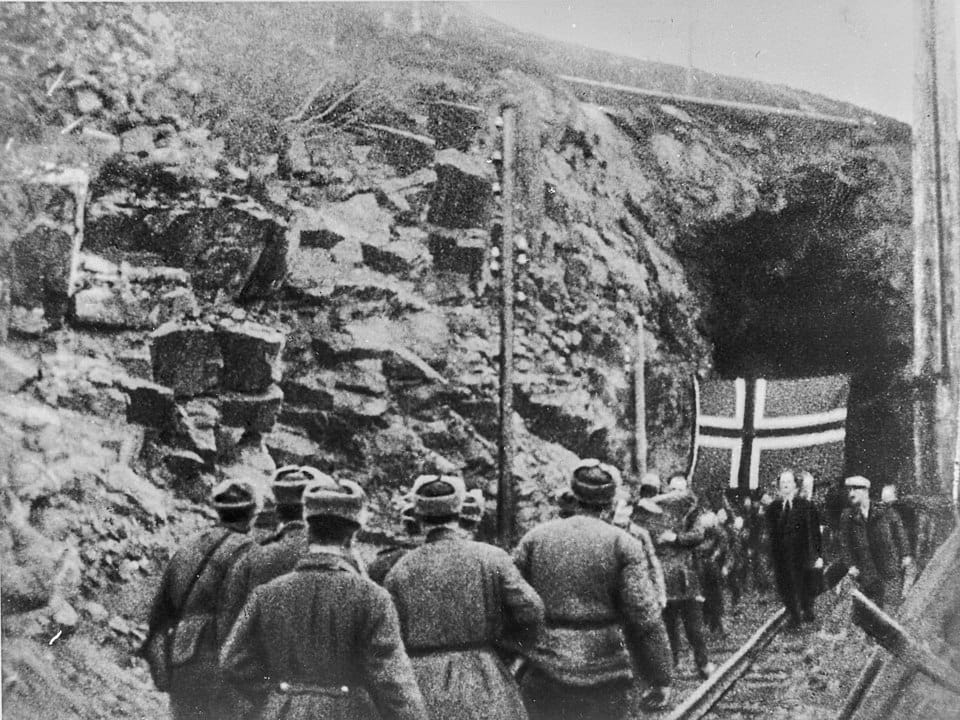
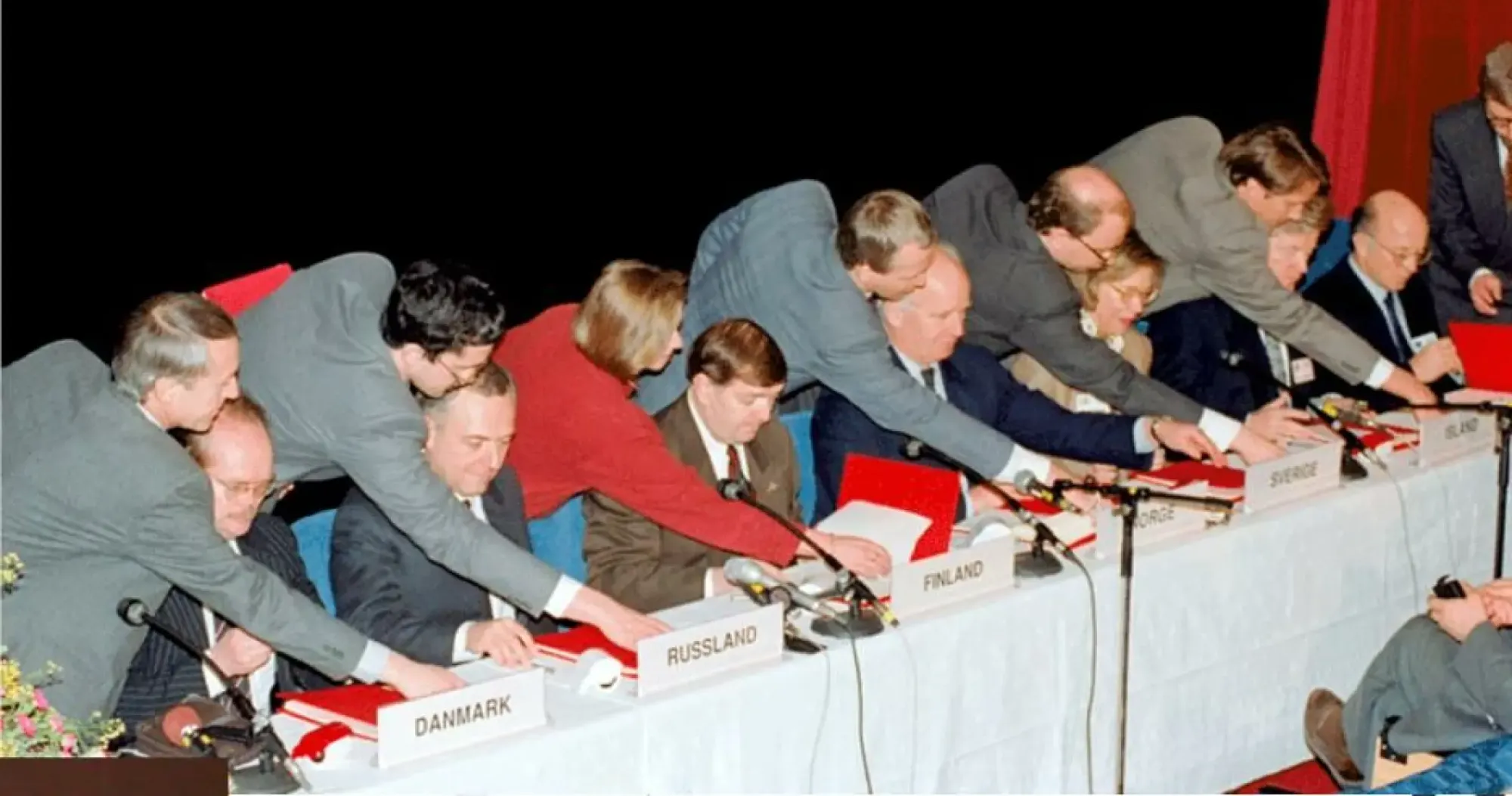
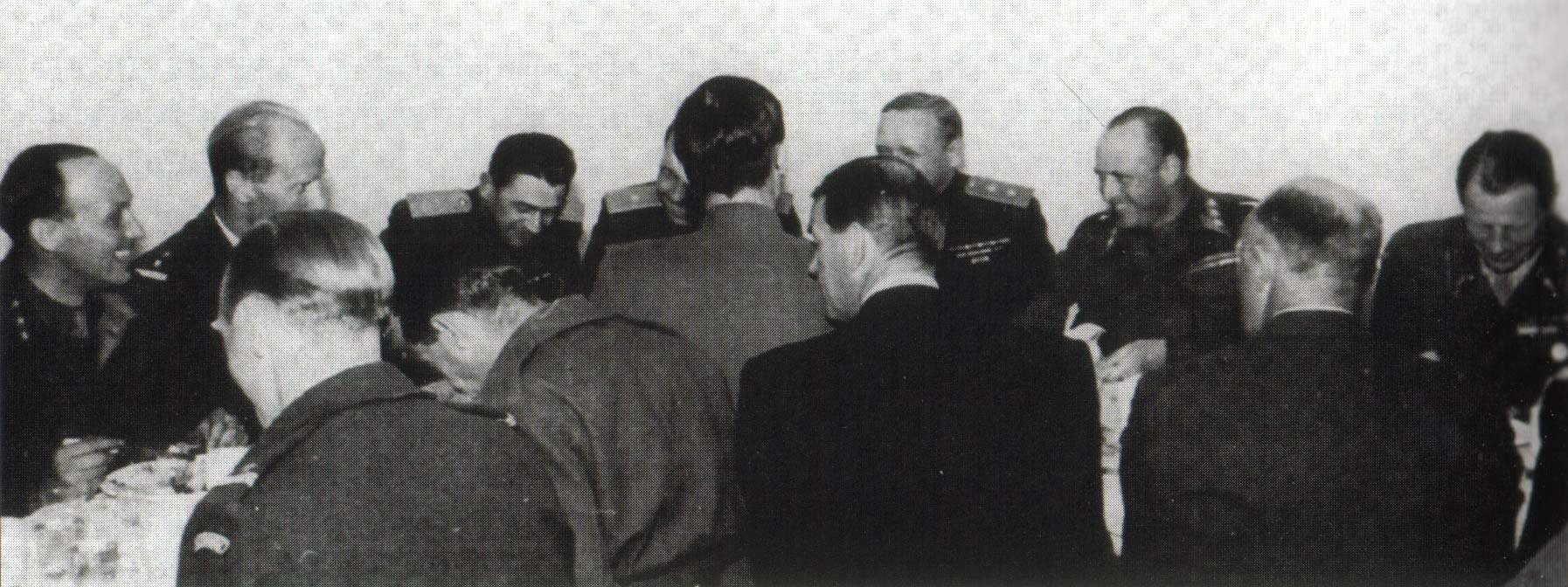
When the Second World War began in 1939, the Soviet Union demonstrated its military strength in France, Germany and Norway, culminating in the liberation of Finnmark in October 1944. The subsequent Soviet era reopened discussions concerning the 1826 border agreement and the 1896 boundary maps. Finland, having previously fought against the USSR, shared Norway’s mistrust, prompting further adjustments to boundary lines and markers.[1] In 1993, the Russo-Norwegian treaty called Kirkeneserklæringen [The Kirkenes Declaration], consisting of Norway, Sweden, Finland and formerly Russia, was signed. The goal was to ensure peace and stability in the Barents Sea. Later, in 2013, the nations added climate change, trade, economy, and transport into the declaration. Following Russia’s invasion of Southern Ukraine, Crimea in 2014 and the Ukraine mainland on 24 February 2022, its participation was suspended, and in September 2023, Russia formally withdrew from the treaty.
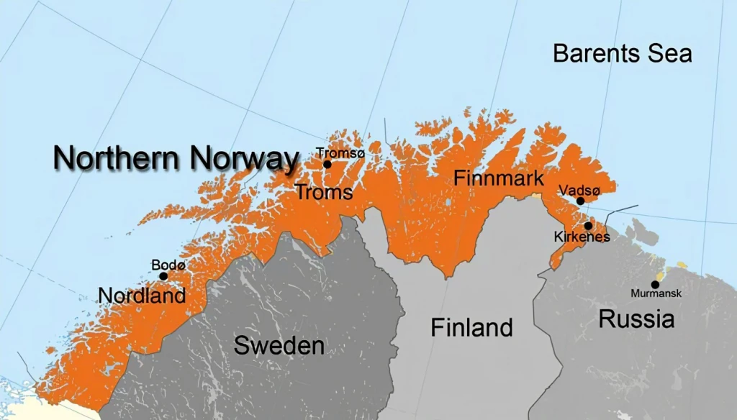
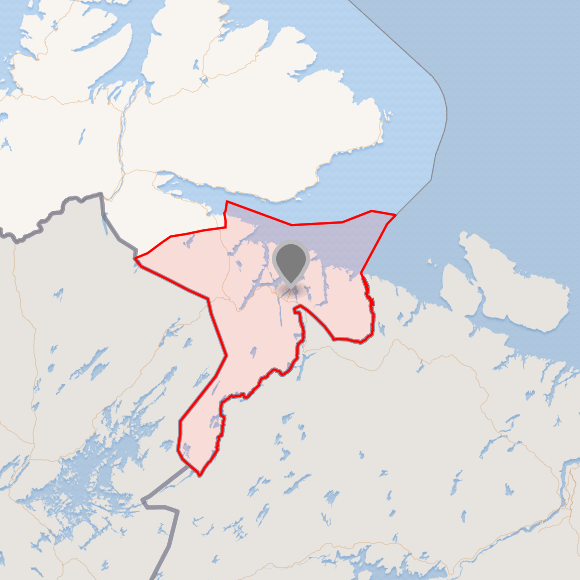
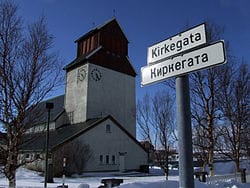
Norway and Russia share a border at Storskog in the High North. Historically, the Norwegian Armed Forces have even participated in football matches with Russian military personnel in Murmansk. The two states have cooperated in shared fishing zones and engaged in trade involving oil and gas. Although Norway’s native population consists of both Norwegians and Sami people [Norwegian minority group], Kirkenes is the only Norwegian town where road signs also appear in Russian Cyrillic script. The most prominent symbol of this long-standing cooperation and friendship, however, is the Soviet memorial—the monument of liberation—located in the centre of Kirkenes. During the annual wreath-laying ceremony in October 2023, held to honour the liberation of Finnmark from Nazi occupation, the Mayor of Kirkenes witnessed Russian General Consul Nikolay Konygin place a Russian wreath over the Ukraine-coloured wreath. The Mayor also encountered opposition from a local Russian woman, and the incident was recorded and later circulated online.[2]
The war in Ukraine has led 411 Ukrainian immigrants to seek asylum in Kirkenes and the Russian General Consulate has, in parallel, increased its monitoring of local inhabitants through activities such as phone tapping, bribery and the tracking of Ukrainian citizens.[4] On a national scale, the Norwegian Directorate of Immigration (UDI) reports that 102,367 Ukrainian citizens have been granted temporary collective protection in Norway since February 2022.[5] The Norwegian Police Security Service (PST) has likewise observed a rise in Russian activity following the influx of Ukrainian immigrants into Norway.[6] The 2017 Frode Berg espionage case continues to cast a long shadow over the Norwegian Intelligence Service (NIS). Berg, a former Norwegian border commissioner for the Norwegian–Russian frontier, was arrested in Moscow in 2017 on charges of spying on behalf of the Norwegian government.[7] More recently, a Norwegian security guard at the US Embassy in Oslo was imprisoned for espionage in favour of Russia and Iran in 2024.[8]
Furthermore, it is important to note that after both the Second World War and the Cold War, Norway and Russia maintained an efficient and mutually lucrative cooperation in areas such as trade, fisheries, oil, gas, aluminium and shipping. In essence, although Norway did not overlook the challenges that followed the wars, the bilateral relationship remained pragmatic and beneficial for both parties.[9] Several scholars have characterised this dynamic as a form of ‘cold trade war’, wherein cooperation persisted despite underlying mutual suspicion.[10] In the author’s assessment, the deterioration of relations between Norway and Russia began in earnest with Vladimir Putin’s 2007 Munich speech, in which he asserted that NATO represented a threat and warned that states seeking to constrain Russian interests would face severe consequences. Only three years later, in 2010, disputes resurfaced regarding ownership of areas in the Barents Sea—a conflict that remains unresolved today.
Following this historical trajectory, it can be concluded that the relationship has deteriorated—from once constructive to increasingly strained, and by 2025 even more so. As Western states have imposed extensive sanctions on Russian assets, oligarchs, shipping, aviation and supply chains, Russia has turned to Africa for resources such as gold, diamonds, timber and corn, while simultaneously deepening its reliance on China and Iran for strategic support.[11] Although Norwegians continue to recognise the Soviet Union’s role in liberating Finnmark in 1944, this historical gratitude does not imply that the county’s inhabitants should accept or be influenced by Russia’s contemporary memory politics.
COGNITIVE BIAS
Cognitive biases arise from our experiences, beliefs and expectations. ‘Cognitive biases are mental errors caused by simplified processing strategies… [and] is a mental error that is consistent and predictable’.[12] In other words, if an individual has repeatedly encountered robberies committed by men, they may be more inclined to assume that any subsequent robbery will also be perpetrated by a man, even if the offender is, in fact, a woman. Awareness of these biases does not guarantee the ability to overcome them. Analysing a problem carefully—and resisting the temptation to rely on assumptions—requires considerable cognitive effort to avoid forming an incomplete or oversimplified interpretation of events.[13] Other biases worth mentioning influencing the human mind are:
Vividness Bias – Vivid or personal information is overweighted compared to abstract or statistical data.
Expectation Bias – New information is unconsciously assimilated into existing beliefs; we see what we expect to see.
Assimilation Bias – Contradictory information is reshaped to fit the person’s prior mental model.
Mirror-Imaging / Ethnocentrism – Assuming foreign actors think, decide, and behave the way we do.
Oversimplification of Complex Causality – Preferring simple, linear explanations in situations that are multicausal and ambiguous.
Availability Bias – Judging probability by how easily examples come to mind (recent, vivid, or personal instances).
Imaginability Bias – If a scenario is easy to imagine, it feels more likely, regardless of its true probability.
Anchoring Bias – Initial values or assumptions serve as anchors that overly influence subsequent adjustments.
Overconfidence Bias – People set overly narrow confidence ranges and overestimate the accuracy of their judgements.[14]
It would be remiss not to acknowledge the author’s own bias regarding Norway’s national policy, shaped by national affiliation—an important consideration when examining cognitive bias among the population of Finnmark. Anchoring bias is evident insofar as the author, as a Norwegian researcher, assesses Russia from a Norwegian vantage point. As a caveat, the people of Finnmark cannot be treated as a single homogeneous group: the county covers an area roughly one-third the size of England in the United Kingdom, and its inhabitants differ significantly in their perceptions of national security and cooperation. Those living near the 198 km border are far more exposed to Russian presence than those residing further south, which exemplifies an oversimplification bias. Generational differences also play a role, as do occupational backgrounds. Similarly, the presence of Russian-language road signs does not apply uniformly across Finnmark.
It is also relevant to note the ‘grenseboerbevis’ [Residency Permit]—a permit allowing residents of the border area to cross without a visa. This arrangement facilitated local trade and people-to-people relations, but applied only to those living and working in Sør-Varanger .[15] This illustrates both availability bias and assimilation bias, as there are clear differences between younger and older generations, variations in road signage across regions, and differing reasons for which residents held crossing permits.
A clear distinction must be drawn between societal perceptions and state policy. Since joining NATO in 1949, Norway has sought to balance deterrence with engagement by maintaining a credible national defence posture—supported by military bases, radar installations and routine exercises in Finnmark—while simultaneously pursuing constructive cooperation with Russia when circumstances have permitted. Initiatives such as the Arctic Council, nuclear waste management projects, maritime border delimitation and annual fisheries quota negotiations have long been central elements of Norwegian foreign policy and are widely regarded as diplomatic achievements.[16] It should also be noted that the population holds few illusions about the Russian regime. For years, Russian jamming has disrupted not only military and civilian aircraft and helicopter operations, but also personal safety and health alarms, affecting ordinary residents.[17] Consequently, the author argues that the relative silence among inhabitants may imply a degree of acquiescence or perceived cooperation with the Russian Federation—stemming either from fear of Russian aggression, prompting compliance, or from the influence of availability and anchoring biases.
HOW DO WE MITIGATE COGNITIVE BIAS?
Methods for reducing cognitive bias—particularly through structured analytical techniques (SATs)—are preferred when seeking to challenge established assumptions. One such SAT is the Analysis of Competing Hypotheses (ACH), a method widely used within intelligence services. Although techniques for mitigating bias have sometimes been dismissed as ‘not precise enough’, notably by Martha Whitesmith, a Senior Intelligence Analyst in the UK Ministry of Defence.[18] This does not mean that all SATs lack value. For example, the confidence reckoner, which evaluates the reliability and orientation of sources, and the post-mortem approach—asking ‘What if we are wrong?’ to test whether key assumptions might fail—are both effective tools for reducing cognitive bias. This is why the combined use of SATs is generally more robust than relying on any single technique alone.
The first technique—the confidence reckoner—requires analysts to evaluate whether a source exhibits a right- or left-leaning bias, how many independent sources report the same information, and whether the source is transparent about its own origins. These factors are weighted when assessing overall reliability. This is why intelligence analysts use media-bias fact-checking tools, many of which were developed within the intelligence community but are also accessible to the public. For instance, Norway is categorised as left-centre-based and scores highly on factual reporting .[19] Assessing one’s confidence in an assumption is advantageous, except in situations where time pressure is acute—as is often the case in intelligence work—forcing analysts to rely more heavily on intuition than is ideal for analytical precision.
The second method—distinct from Red Teaming or acting as a Devil’s Advocate (which involves assuming the adversary’s perspective)—is to examine how the situation would appear if one were wrong. For example, the adversary might employ submarines or Special Forces in an offensive action or sabotage campaign, or an allied state might fail to provide expected equipment or require more time than anticipated to complete joint exercises. This process compels analysts to confront potential vulnerabilities in their reasoning, recognise that their assumptions may be flawed, and re-evaluate their confidence while remaining open to alternative interpretations and uncertainties.[20] Within the context of this article, it is essential to acknowledge that former partners or presumed ‘allies’ may become less supportive or reliable as political circumstances shift. Recognising this possibility—and deliberately incorporating evidence that challenges one’s own assumptions—enhances an analyst’s ability to process complex information. Such practice strengthens both the robustness of intelligence assessments provided to policymakers and the quality of professional dialogue within analytical teams.
Biases are difficult to mitigate because they are deeply rooted in one’s identity, beliefs, upbringing, environment and professional culture. This is why the key lessons from the 9/11 ‘weapons of mass destruction’ intelligence failure—an example of availability bias, wherein readily accessible information is favoured over information that is relevant and challenges preconceived beliefs—and the Pearl Harbor warning failure—an illustration of ethnocentric bias, where analysts relied on their own cultural assumptions rather than recognising that other nations may interpret a situation differently—remain highly relevant for analysts preparing to brief decision-makers .[21] Acknowledging personal limitations, and recognising that human emotions and experiences inevitably influence analytical judgement, is the first step toward cultivating the mental flexibility required for alternative thinking.
In essence, when circumstances allow, inhabitants of Kirkenes in Finnmark should prioritise the use of System 2 thinking—deliberative, analytical reasoning—as described by Daniel Kahneman, rather than relying on the more intuitive and assumption-driven System 1 approach. Engaging more deeply in analytical reasoning and employing SATs broadens perspective and reduces the likelihood of deeming a potential attack ‘unbelievable’, as occurred in Pearl Harbor in 1941, where Admiral Kimmel arguably perceived it as unjust that reality did not align with his preconceived views of Japan’s capabilities and intentions.[22]
Finnmark and its inhabitants share a land border with Russia. Their relationship is shaped not only by trade and the events of the Second World War, but also by student exchanges, school visits, sporting events, Sami settlements and historical ties dating back to the Viking Age. With more than 400 Russian citizens living in Kirkenes—approximately 4% of the town’s 10,000 inhabitants—Russian can be heard in everyday settings, from shop counters to schools and cultural events.[23] Finnmark is also home to an Orthodox chapel, St. George’s Chapel, despite the fact that Norwegians are predominantly Protestant Christians and have been since the country’s conversion from Catholicism in 1537.[24]
While Russian–Norwegian history is long and significant, it does not justify current developments. Human beings tend to assign greater weight to past events than to those unfolding in the present. When writing a résumé, one typically emphasises past achievements; similarly, solicitors highlight favourable details about their clients when arguing a case in court.[25] The people of Finnmark are accustomed to interacting with Russians. Although many Russians fall into what could be termed a ‘Black Swan’ category—meaning that while numerous Russians work in intelligence, not all intelligence officers are Russian—residents of Finnmark often appear to downplay the potential threat, particularly in light of the war in Ukraine and the political upheavals occurring in Georgia and Moldova. In line with the Black Swan analogy, most inhabitants have experienced predominantly positive interactions with Russians and comparatively few negative incidents. One may argue that ‘Russians are nice people’, but the Russian Military Doctrine places substantial emphasis on human intelligence, making it improbable that no influence or deception efforts are taking place.[26]
Although China is often regarded as “the smart one in class” due to its long-term approach to influence operations, Russia has expanded its own presence and refined its intelligence activities to operate on a similarly long-term horizon while still pursuing short-term tactical gains. This aligns with the assessment of the Danish Military Intelligence Service (FE), which reported on projected Russian actions over a six-month, two-year and five-year period, concluding that within five years a war on European soil without direct US involvement is plausible.[27]
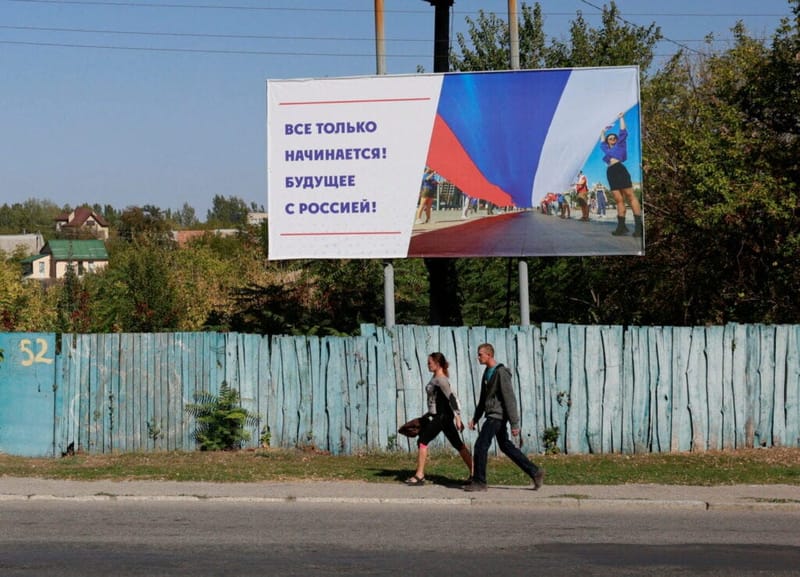
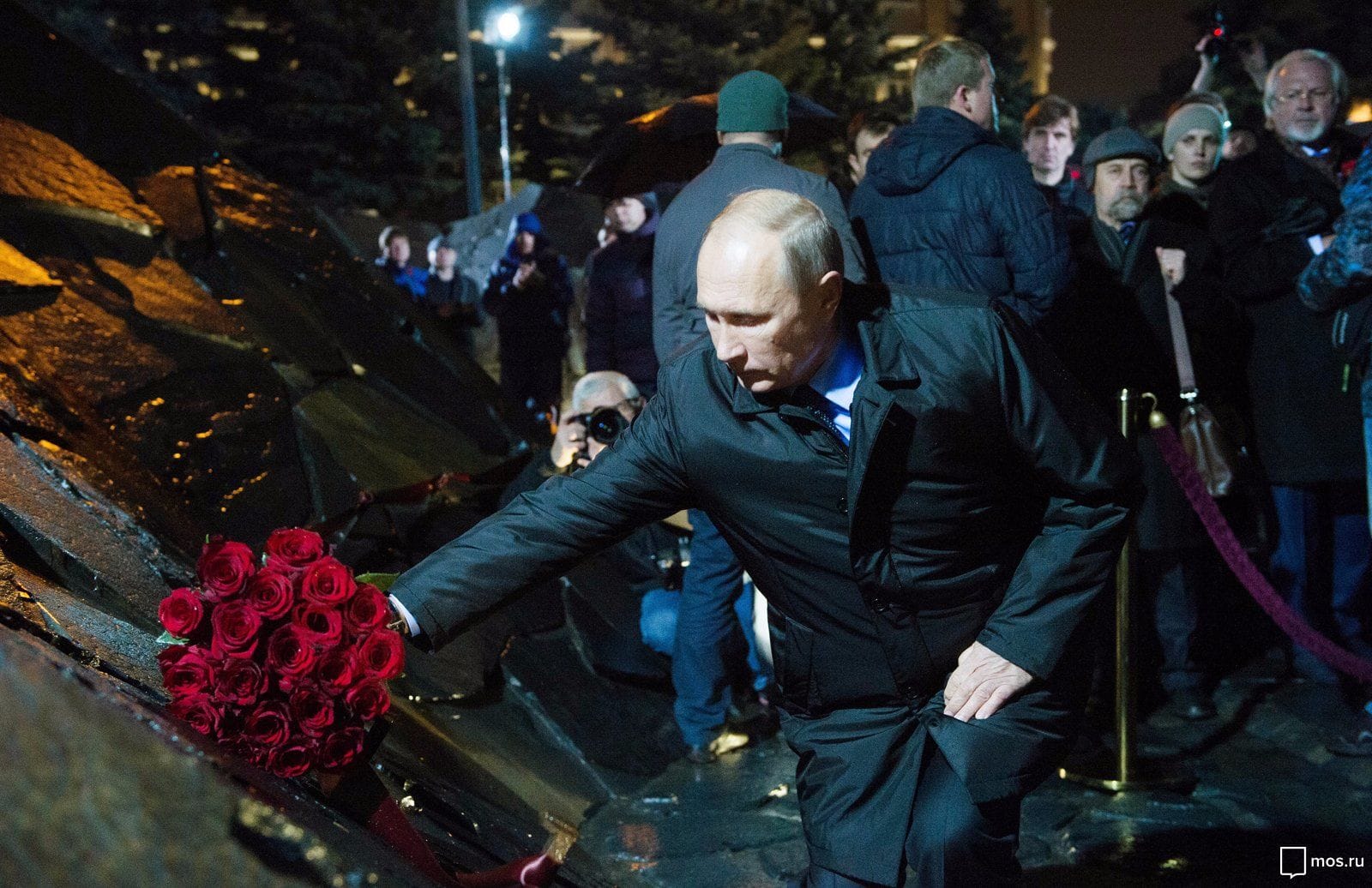
The increase in Russian memory politics is a direct response to Norway’s stance on the war in Ukraine. Russia has appropriated Norway’s 8th of May—celebrated as ‘Veteran and Liberty Day’—to honour Russian soldiers. It has also employed Russian symbols on a striking number of Russian monuments, and the Russian Consulate General has invited politicians to participate in such commemorations .[28] The Russian Ministry of Foreign Affairs has been authorised to ‘check upon Soviet graves on foreign states’ soil’, a mandate consistent with President Putin’s assertive use of memory politics abroad.[29] These activities promote a narrative of grand Russian history while simultaneously increasing the number of on-the-ground ‘diplomats’, many of whom have backgrounds in Russian intelligence. The Russian narrative often frames foreign countries as dependent on Russian intervention for survival, with historical accounts adjusted accordingly. The opening of the Wall of Grief in 2017—a memorial dedicated to victims of Stalinist repression—illustrates Russia’s need to curate and defend its own historical narrative on its own terms .[30] This combination of highly visible and more subtle, less detectable Russian activity contributes to a reduced level of suspicion in Finnmark compared to other parts of Norway, making residents less inclined to suspect Russian espionage than their compatriots further south.
It is sensible to revisit the author’s own bias before turning to Russian methods and the conclusion. Anchoring bias may arise from long-standing exposure to socialist and left-leaning political norms, which have shaped Norway’s governance and educational system. Like many nations, Norwegians take pride in their history—from the Viking Age and the tales of early settlements in England to the country’s later liberation from Denmark and Sweden, which rendered Norway a relatively young independent state. In more recent history, the discovery of oil transformed Norway’s economic fortunes and global standing, marking a decisive departure from its agrarian past. When such narratives form the basis of national identity and collective memory, information that contradicts or challenges them is more easily dismissed.
Norway is also actively constructing contemporary historical narratives. The Norwegian Armed Forces, for instance, emphasise their cultural and historical ties to Ukraine and the early Kievan-Rus Empire, referencing sources such as the Fagrskinna Saga, which identifies Elisaveta (Ellisiv) as the last Viking Queen of Norway and spouse of Harald Hardrada.[31] The Norwegian Armed Forces are therefore exploiting this historical narrative to strengthen morale and cultivate a more cohesive sense of ‘us’ (Norway–Ukraine), thereby enhancing resilience against a strong aggressor, Russia.[32] This reflects a bias rooted in national pride, which also shapes the author’s perspective—making the author susceptible to anchoring bias and to mirror-imaging assumptions about how Russians think.
RUSSIAN MEMORY POLITICS
Russians have long traditions for offering gifts, showing gratitude, and using trustworthy workers, such as priests and scouts, as spies.[33] This approach bears resemblance to practices of the Byzantine Empire and appears to have been inherited as a method for cultivating trust and goodwill among Russia’s adversaries. Notably, although Russia has changed its flag, colours and even its name over time, its underlying intent and strategic ethos have remained consistent—particularly in its use of foreign assets to advance national interests. Historically, the Byzantine emperors employed Vikings, or Varangians—primarily Swedish—as elite bodyguards, a role later assumed by the Anglo-Saxons. In later periods, Russian Tsars employed German bodyguards, and the first head of the Cheka, the Polish revolutionary Felix Dzerzhinsky, also relied on Polish guards. One of the more recent historical examples is a security chief under Stalin who used bodyguards of Jewish and Georgian backgrounds.[34] The historical connections between Scandinavia and the Far East extend back to around the year 800, creating a longstanding shared history and, to some extent, a sense of connection between Norwegians and Russians.
A considerable leap forward to the present day reveals a more immediate concern arising from the Ukraine–Russia war. It is unsurprising that Russia operates agents in Norway, as PST noted when Norway deported 15 Russian intelligence officers in 2023. In human intelligence (HUMINT), the main motivating factors for defection are money, ideology, compromise and ego, known collectively as MICE.[35] One could argue that citizens of Kirkenes are vulnerable to Russian attempts to recruit them as sources, since all four motivations may be relevant in a small border community. However, Norway’s intelligence presence, with NIS in Finnmark and PST operating in Kirkenes, makes it risky for Russia to handle agents near signal intelligence (SIGINT) facilities and a nearby counterintelligence branch. Owing to the intensity of the war in Ukraine, the impact of Western sanctions and Russia’s increasing dependence on China and Iran, Russian intelligence activity in Norway has expanded, involving both SIGINT and HUMINT capabilities.[36] This places the inhabitants at greater risk of exposure to Russian intelligence efforts, because Russia is willing to take more operational risks when it assumes that Norway already views it as an adversary. As a result, Russia may perceive it has less to lose when approaching a potential Norwegian defector.
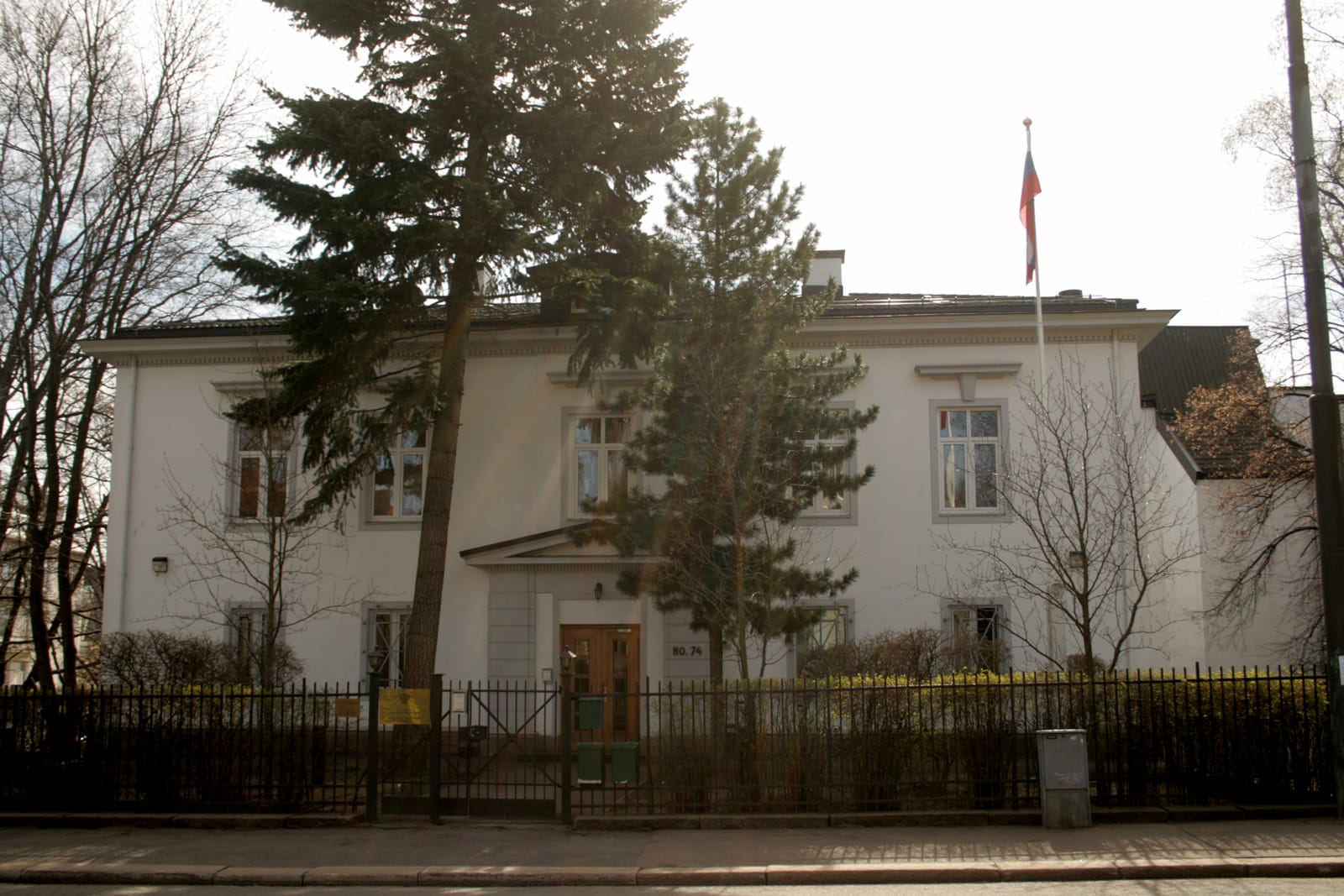
Russia’s modus operandi places significant emphasis on HUMINT. Since the invasion of Ukraine, Russia has adopted increasingly risk-tolerant collection methods, which has resulted in a greater number of intelligence officers being exposed or detained .[37] Timely, however, is the question ‘Is Russia spying more – or are more spies just getting caught?’ as Shaun Walker stated in his article in the Guardian in 2023.[38] The reason for this question is because of Russia’s multiple expulsions, its priority in Ukraine, its expansion in Africa with the Wagner group,[39] and its desperate need for support from China and Iran. Since the war broke out, several European countries have exposed Russian intelligence officers, and the Security Service of Ukraine (SBU) has exposed over 600 Russian agents. Across Russian intelligence agencies—the foreign intelligence service (SVR), the internal security service and successor to the KGB (FSB), and the military intelligence service (GU, formerly GRU)—there has been a marked increase in risk-taking behaviour. Russian diplomats have engaged more actively in acquiring information related to technology, foreign policy, academic research, economic matters and energy.[40] This trend is driven by the high level of technology and innovation in Western countries, particularly within the academic sector. It is for this reason that so many Russian and Chinese embassy personnel attend academic conferences in Europe and the United States.
The threat posed by Russia, even when manifested within Norway, is ultimately oriented towards NATO. When Norway has surveyed its citizens about the possibility of a Russian invasion, few believe that such an event is likely. The prevailing concern instead relates to Russia’s soft-security interests and its capacity to act strategically over the long term. This creates the possibility that the people of Finnmark—and, perhaps more immediately, those in Kirkenes—could one day find themselves facing a Norway very different from the one they know. This dynamic recalls what has been described as the ‘Gerasimov doctrine’, often associated with hybrid or liminal warfare, in which Russia intervenes in a manner that is either not detected or detected only when it is too late for the state to respond effectively.[41] This approach has been demonstrated in Georgia in 2008—although that conflict was more direct than subtle—as well as in Crimea in 2014 and Ukraine in 2022. Given these precedents, there is little reason to assume that Finnmark would be exempt from a similar long-term hybrid warfare strategy.
MITIGATING RUSSIAN MEMORY POLITICS
To mitigate cognitive bias, the first step is to detect and identify its presence; without this, there is nothing to reduce. Because Russia’s presence in Finnmark is long, historic and, de facto, the baseline for what is considered the status quo and therefore ‘normal’, it can be difficult to recognise where potential problems lie. To challenge the public’s assumptions, it is worth considering whether it is Oslo, or other parts of Norway, that may hold biased views rather than the people of Finnmark, and whether Oslo interprets the Russian threat as greater than it appears to those living in the High North. A useful way to begin identifying the issue is to analyse and reflect on the following questions:
1. Is there an enemy from the outside that is threatening us?
2. Is the organisational structure within damaging us?
3. Are we as a nation aware of what is going on and why?
These are questions that encourage reflection on the possibility of ‘innocent enemies’, meaning individuals who perform their duties poorly, become complacent in their security practices and may, for example, unwittingly expose national secrets to Russia. There are also ‘outside enemies’, referring to situations in which Russia operates so effectively that, even when Norwegian defence systems detect hostile activity, the Russians manage to breach them regardless. This can, of course, happen to any state. Finally, there are inherent enemies, which relate to whether Norway possesses security systems that are sufficiently robust to identify, detect and respond to threats originating from Russia.[42]
To address these questions, NATO standards and policy, together with Norway’s own national security assessments, confirm that a clear threat exists. There is an enemy from the outside which, in the case of Finnmark, is effectively on the inside, residing in Kirkenes. The organisational structure of democracies is notable in this regard. While democracy ensures freedom of choice, participation and civil liberties, it is also a bureaucratic system, and this makes governmental responses slow both in detection and reaction.[43] Democracy can also expose vulnerabilities indirectly, as demonstrated by the influx of migrants pushed towards Norway’s border at Storskog by Russia in 2015, and again at the Finnish–Russian border as recently as March 2024, when Russia facilitated a substantial flow of migrants to generate disruption.[44] It is difficult for democratic states to react swiftly, because legislative change requires deliberation, voting and public procedures.
When democracy works – which it certainly does – it can be highly effective. This was demonstrated when the PST arrested the guest researcher at the University of Tromsø, José Assis Giammaria, whose real Russian name was Mikhail Valeriyevich Mikushin, and who allegedly conducted intelligence activities in favour of Russia. The Russian Embassy in Oslo denied any knowledge of Mikushin, and Brazil has requested his extradition due to an ongoing investigation. Mikushin attended the GU ‘spy school’ and is now awaiting a verdict.
Another example is the case of researcher Harsharn Singh Tathgar, who worked on 3D-printing projects within the oil and gas sector. In its 2024 annual threat assessment, the PST warned that researchers in this field, as well as companies working with advanced technology, might be exploited for Russia’s weapons industry. Tathgar admitted receiving money from a Russian intelligence officer, who had been expelled in 2020 for espionage.[45]
Even when such biases are mitigated, the people of Finnmark may still have understandable reasons for being Russian-friendly. The proud history of the Second World War and the liberation of Finnmark—events that should not be forgotten—is taught in schools, churches and museums throughout the region. This can produce an availability bias, meaning that readily accessible information is weighted more heavily than information that contradicts it.[46]
Even though the PST periodically arrests Russian spies in Norway, residents of Finnmark may still overlook Russia’s ongoing efforts to exploit human assets for intelligence collection.

More likely, however, is the presence of anchoring bias, which is understandable given Russia’s active memory politics in Finnmark, the increasing number of Russian diplomats, and the heightened focus on culture, shared Russian–Norwegian history and Putin’s prominent use of these narratives.[47]
People in Finnmark, especially in the eastern areas, often place greater emphasis on historical ties than on contemporary security threats because of their continued exposure to Russian culture. Most importantly, anchoring on the ‘good old tales’ promoted by the Russian General Consulate in Kirkenes, and at times even by the Norwegian government itself, reinforces these perceptions .[48] This results in the population being more susceptible to Russian disinformation than residents in other parts of Norway.
One method available to the people of Finnmark is to view Russia without placing undue weight on the events of 1944, while also looking beyond the arrests carried out by the PST. Rethinking the problem and attempting to remain non-judgemental—whether in favour of or against Russia—and mapping the question, ‘What aspects of Russian politics are influencing Norway?’ can serve as a practical exercise for reducing anchoring bias. It is worth noting that SAT has no experimental evidence of working, but doing something (rethinking and trying to challenge one’s thoughts) versus doing nothing about anchored biases seems favourable, looking at the problem objectively, instead of a more subjective manner.[49] This is a difficult cognitive task that requires analytical thinking rather than assuming, which is considered intuitive thinking.[50] However, it remains challenging to disregard history, as humans are storytellers who live through the narratives of our ancestors’ achievements and conquests. New times require new ways of thinking, and the present situation—especially with ‘the special operation’ in Ukraine, which demonstrates how Russia perceives itself as superior to another European and more democratic state—suggests that it may be overdue for Norway to consider severing its remaining ties with its aggressor in the east.
CONCLUSION
Finnmark is overlooking the fact that Russia has interests extending far beyond ‘just demonstrating its close war history with Norway’. From Byzantine times, through the Tsarist period, and later under Lenin, Stalin and now Putin, there has been continuous exploitation, recruitment of human sources and efforts to undermine Western democratic systems. Russia has demonstrated its willingness to interfere not only in Georgia and Ukraine, but also in the 2016 US election, the UK Brexit referendum, the Azerbaijan–Armenia conflict, and through ongoing cyber-attacks on government departments in Oslo. Russia is the aggressor; Finnmark has simply not recognised it as such yet.
Russia is increasing its presence in the High North, and together with its ally, China, Finnmark is experiencing activity not only in Kirkenes, but also in Svalbard and Tromsø. This creates political pressure, while the population has been largely shielded from having to take a clear position. Moreover, there is a persistent stigma concerning how inhabitants ought to view their relationship with Russia. This tension is often amplified in national media, where politicians and experts from southern Norway, particularly Oslo, contribute to friction between the High North and the capital. Such negativity bias reinforces Finnmark’s inclination towards friendliness with Russia, partly because residents perceive little support or understanding from Oslo.
To mitigate cognitive biases—or more precisely, to reduce the anchoring effect of Russo-Norwegian narratives dating back to 1944—the people of Finnmark may benefit from beginning their historical assessment with the present, in 2026, and looking backwards. There have been far more troubling incidents than positive ones involving Russian diplomats, many of whom are intelligence officers rather than genuine diplomats, and who often operate with undiplomatic intentions.[51] Across Europe, countries are expelling Russian diplomats for a reason. It is not simply because these individuals promote selective war history; it is because they collect intelligence on behalf of the Russian Federation.
Cognitive biases will always exist; the challenge is to mitigate them, reduce their impact and remain aware of which histories are being told and imposed. If not actively countered, people may become vulnerable to disinformation warfare conducted by the Kremlin’s propaganda machine, not to persuade them to adopt pro-Russian views, but to erode confidence in their own government and democratic institutions. Inhabitants of Norway generally favour a left-oriented political stance, which is why it may be in the Kremlin’s interest to provoke anything that causes the population to question, resist or challenge established democratic values.
Further research on this topic should improve public understanding of how to challenge established truths by using scientific psychological methods. Such approaches could be incorporated into educational institutions and offered as free courses or community programmes to the people of Finnmark and the wider Norwegian and Nordic population.
FOTNOTER
[1] CIA. Boundary Between Norway and the USSR.
[2] The Barents Observer.[News website]. ‘Russian General Consul stirs strife by the war memorial in Kirkenes’. https://www.thebarentsobserver.com/life-and-public/russian-general-consul-stirs-strife-by-the-war-memorial-in-kirkenes/150741
[3] Daily News. Norwegian Russian border
[4] VG. ‘PST: Slik har Putin økt presset mot Norge i nord’. [Newspaper]. https://www.vg.no/nyheter/innenriks/i/4o9kP6/pst-slik-har-putin-oekt-presset-mot-norge-i-nord
[5] Norwegian Directorate of Immigration (UDI), Statistics on Ukraine situation, UDI Statistics Portal, https://www.udi.no/en/statistics-and-analysis/ukraina/
[6] Taub, Ben. ‘Russias Espionage War in the Arctic’ [Article]. https://pulitzercenter.org/stories/russias-espionage-war-arctic
[7] Kalsaas, ‘Kald Krig i Kommentarfeltet?’ [Cold War in the Comment Section?]
[8] The Independent, "Russia ‘Spy’ Who Worked at US Embassy."
[9] Wilhelmsen, Julie. ‘Avskrekking og beroligelse. Hvilken effekt har denne politikken, herunder basepolitikken, hatt for Russlands politikk overfor Norge?’ [Report to the Norwegian Defence Comission]. https://files.nettsteder.regjeringen.no/wpuploads01/sites/495/2022/09/Forsvarskommisjonsrapport%C2%AD_JW%C2%AD_NUPI.pdf
[10] Markussen, Joakim. (2021). Sikkerhetspolitisk minnediplomati: Opprettelsen av Frigjøringsmonumentet i Kirkenes 1945–1952. Nordisk Østforum. 35. 98. https://www.researchgate.net/publication/352775957_Sikkerhetspolitisk_minnediplomati_Opprettelsen_av_Frigjoringsmonumentet_i_Kirkenes_1945-1952
[11] Norwegian Intelligence Service, Threat Assessment ‘Focus 2024’. https://www.etterretningstjenesten.no/publikasjoner/focus/Focus24_contents
[12] Heuer and Pherson, Psychology of Intelligence Analysis p. 111.
[13] Ibid. p. 112.
[14] Heuer and Pherson p. 111-180
[15] UDI. ‘Grenseboerbevis for personer fra Barentsregionen. [Government website]. https://www.udi.no/skal-soke/besok-og-visum/grenseboerbevis/
[16] Hønneland, Geir & Nilssen, Frode. (2001). Quota allocation in Russia's northern fishery basin: Principles and practice. Ocean & Coastal Management. 44. 471-488. https://www.researchgate.net/publication/222229900_Quota_allocation_in_Russia%27s_northern_fishery_basin_Principles_and_practice
[17] The Barents Observer. ‘We were spoofed on approaching Kirkenes today’ [Newspaper]. https://www.thebarentsobserver.com/news/we-were-spoofed-on-approaching-kirkenes-today/423323
[18] Whitesmith, ‘Experimental Research in Reducing the Risk of Cognitive Bias in Intelligence Analysis’.
[19] Media Bias Fact Checker. [Fact checking site]. https://mediabiasfactcheck.com/the-local-norway/
[20] Heuer and Pherson, Psychology of Intelligence Analysis p. 121-122.
[21] Riehle, Kevin. ‘How do we know if an intelligence analytic product is good?’, Intelligence and National Security, https://doi.org/10.1080/02684527.2025.2468051
[22] Nafrada,Caesar and Caddell, Joseph. ‘Never Thought They Could Pull Off Such an Attack’: Prejudice and Pearl Harbor. [Commentary]. https://warontherocks.com/2021/12/never-thought-they-could-pull-off-such-an-attack-prejudice-and-pearl-harbor/
[23] Arctic Today. [News site]. On Norway’s Arctic border with Russia, a town freezes ties with its eastern neighbour. https://www.arctictoday.com/on-norways-arctic-border-with-russia-a-town-freezes-ties-with-its-eastern-neighbor/
[24] Den Katolske Kirke.’The history of the Catholic Church in Norway’. [Church website]. https://www.katolsk.no/organisasjon/www/about_en#:~:text=The%20history%20of%20the%20Catholic%20Church%20in%20Norway%20is%20as,king%20Saint%20Olav%20(%2B%201030).
[25] Zerubavel, Time Maps: Collective Memory and the Social Shape of the Past, p. 13.
[26] Bowen, Andrew S. ‘Russian Military Intelligence: Background and
Issues for Congress’. [Congress Paper]. https://crsreports.congress.gov/product/pdf/R/R46616/6
[27] Forsvarets Efterretningstjeneste. ‘Opdateret vurdering af truslen fra Rusland mod Rigsfællesskabet’[Threat assessment]. https://www.fe-ddis.dk/globalassets/fe/dokumenter/2025/trusselsvurderinger/-20250209_opdateret_vurdering_af_truslen_fra_rusland_mod--.pdf
[28] Aalmen Markussen, ‘Monumental Minnepolitikk’. [Monumental Memory Politics: Russia’s Utilization of Soviet and Russian War Memorials in Northern Norway 2014–2023]
[29] Ibid.
[30] McGlynn, Memory Makers: The Politics of the Past in Putin’s Russia.
[31] Amundsen, Baard. ‘The Princess from Kyiv was Norway's last Viking queen’. [Article]. https://www.sciencenorway.no/history-viking-age/the-princess-from-kyiv-was-norways-last-viking-queen/2121771
[32] Kollvangsnes, Amanda L. ‘Den nye militærpatchen knytter sammen norsk og ukrainsk historie.’ [Article]. https://www.forsvaretsforum.no/heimevernet-instruktor-operasjon-gungne/den-nye-militaerpatchen-knytter-sammen-norsk-og-ukrainsk-historie/392915
[33] Gustafson, ‘Echo of Empires’.
[34] Ibid.
[35] Herman, Intelligence Power in Peace and War.
[36] PST. National Threat Assessment 2024
[37] Riehle, ‘The Ukraine War and the Shift in Russian Intelligence Priorities’.
[38] Walker,” Is Russia spying more?”
[39] O’Hara, Osen, Lim, and White, ‘The Wagner Group in Africa: A Challenge to the West’
[40] Riehle.
[41] Kilcullen, ‘The Evolution of Unconventional Warfare’.
[42] Betts, Enemies of Intelligence: Knowledge and Power in American National Security, p. 9-14.
[43] Kilcullen, ‘The Evolution of Unconventional Warfare’.
[44] The Guardian. ‘Norway tells refugees who used cycling loophole to enter to return to Russia’. [Newspaper]. https://www.theguardian.com/world/2016/jan/14/norway-tells-refugees-bikes-russia-bicycle-immigration-storskog
[45] National Threat Assessment 2023. The Norwegian Police Security Service (PST).
[46] Heuer and Pherson, Psychology of Intelligence Analysis p.147-149.
[47] Ibid. p. 150-152.
[48] Aalmen Markussen, ‘Monumental Minnepolitikk’. [Monumental Memory Politics: Russia’s Utilization of Soviet and Russian War Memorials in Northern Norway 2014–2023]
[49] Heuer and Pherson p. 152.
[50] Kahneman, Thinking, Fast and Slow.
[51] NRK. PST har avdekket russisk etterretningsvirksomhet i Vestland. [News article]. https://www.nrk.no/vestland/pst-har-avdekket-russisk-etterretningsvirksomhet-i-vest-1.16868180
Photo: Soviets meet Norwegians sheltering in a mine in Finnmark at the liberation in 1944 / Wikimedia commons