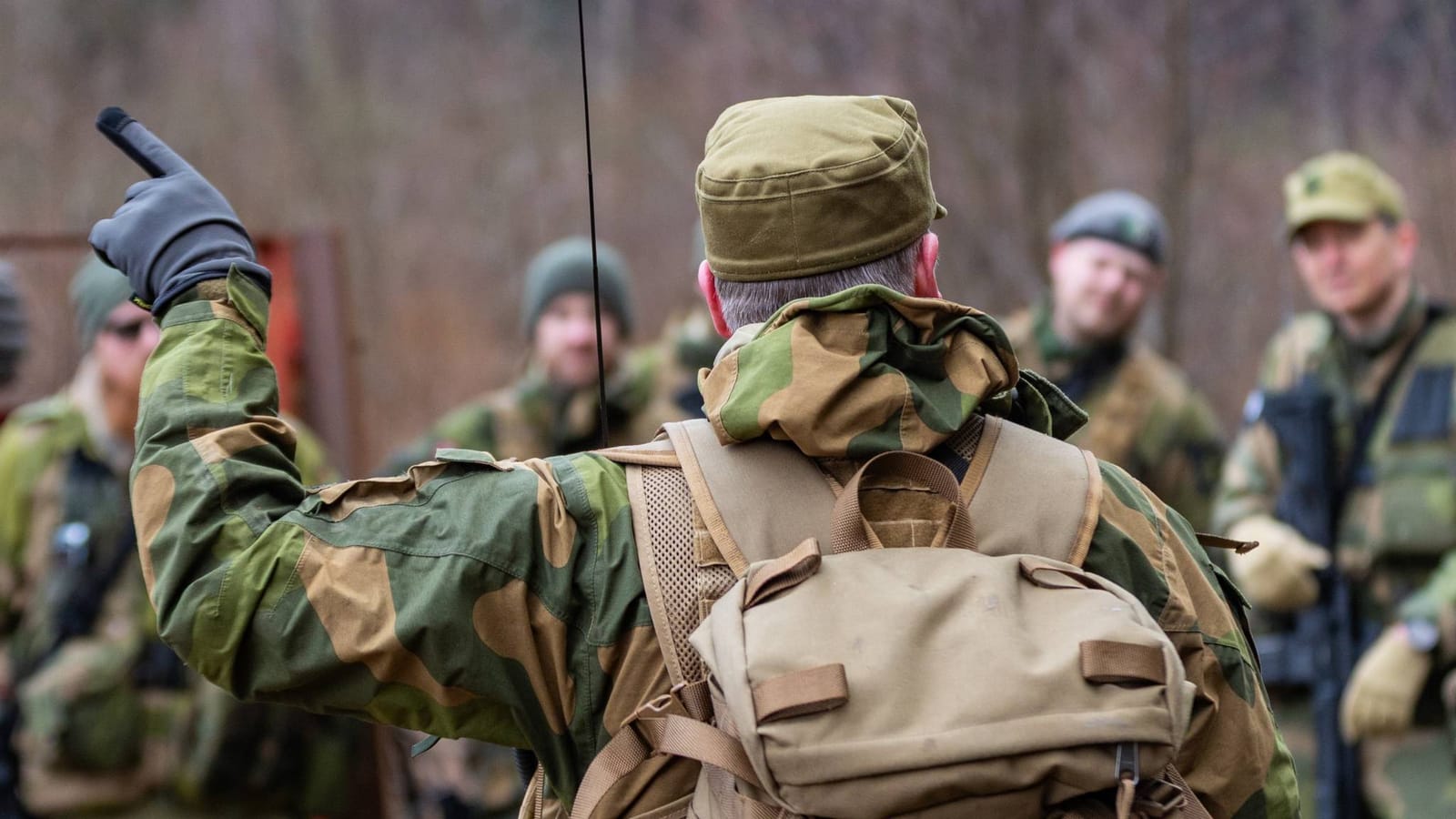
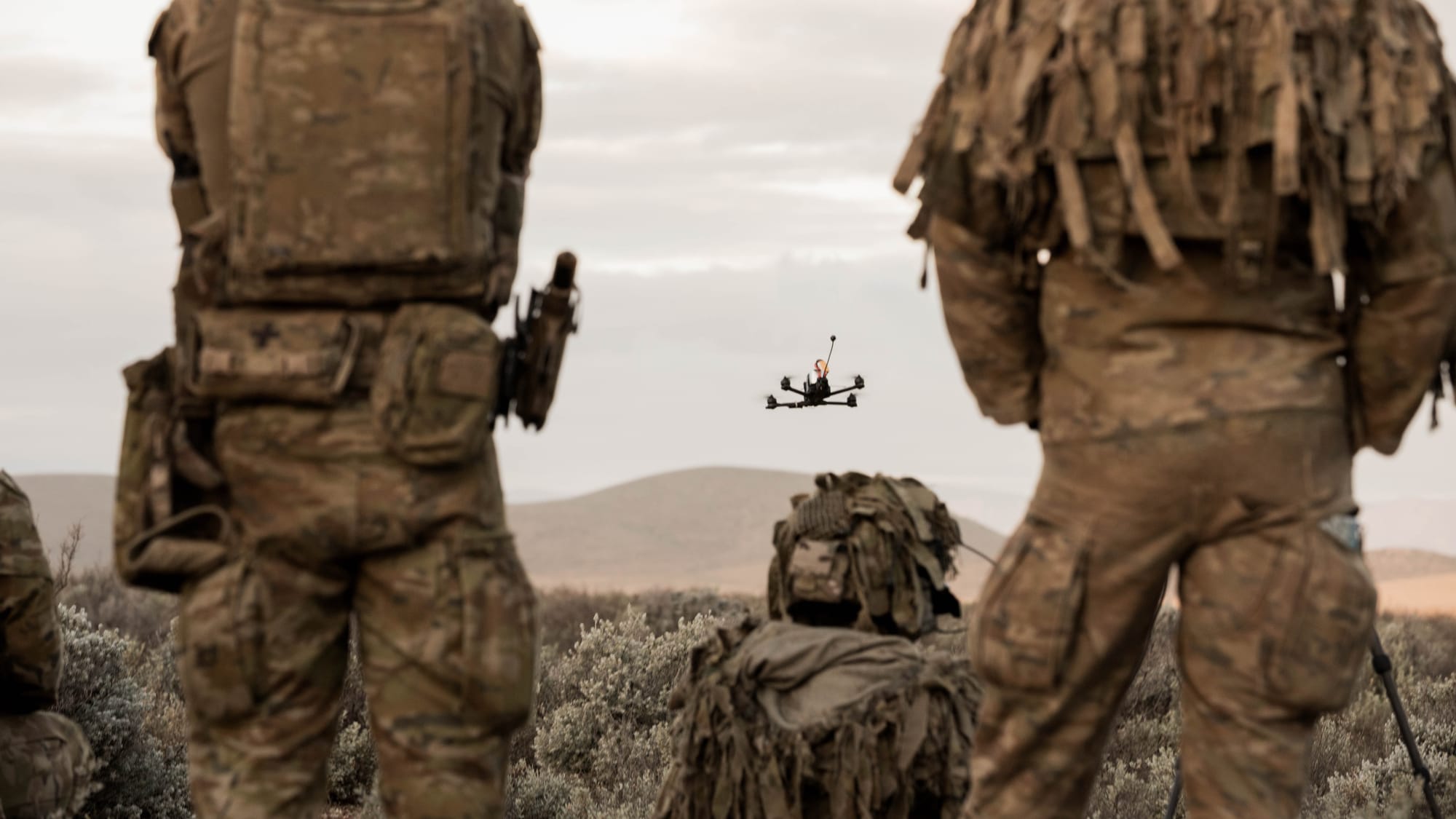
Mission Command is affirmed in doctrine but too often assumed in practice. An organisation accustomed to continuous reporting, immediate approvals and detailed supervision will not suddenly become decentralised when communications fail. Yet that is precisely what a contested battlespace may demand. Electronic warfare can sever command networks, while robotics and autonomous systems extend the reach of junior commanders and tempt higher headquarters towards greater control. The challenge is therefore not simply technological. It is whether our command culture, training and allocation of authority genuinely prepare subordinates to act without immediate direction. Mission Command must be developed and tested as a combat capability before contact, not invoked as an emergency response after connectivity is lost.
About the author
Warrant Officer Class One Christopher Sharp enlisted in the Australian Army in February 2000, commencing his career with the Royal Australian Armoured Corps at the 1st Armoured Regiment. Throughout more than 26 years of service, he has developed extensive experience in operational leadership, organisational transformation and military innovation.
His career spans Armoured Regiments, training establishments and higher headquarters, with operational deployments to Iraq, Afghanistan, Papua New Guinea and South Sudan. He has held multiple Regimental Sergeant Major appointments across tactical, operational and strategic environments.
In 2021, WO1 Sharp served as a strategic advisor to the Chief of Army, leading initiatives to modernise leadership development. He subsequently served as Regimental Sergeant Major of the 10th Light Horse Regiment and, in 2024, the Australian Contingent in South Sudan.
In 2025, WO1 Sharp returned to the 1st Armoured Regiment as Regimental Sergeant Major during its transformation into Army’s Combat Experimentation Group. His leadership has focused on fostering innovation and integrating robotics and autonomous systems into contemporary land warfare, including pioneering live-fire experimentation and participation in Project Convergence Capstone 6.
WO1 Sharp holds a Master of Business from the University of New South Wales.
Mission Command in a Contested Environment
For over a century, armies have confronted a familiar problem: How to maintain momentum when plans collide with uncertainty, friction and incomplete information. Technology has changed the means of command, but not this fundamental challenge.
Contemporary formations depend on digital networks to share intelligence, coordinate fires and maintain situational awareness. These networks offer considerable advantages, but they also create vulnerabilities. An adversary may detect emissions, jam communications, and attack infrastructure or target headquarters. The expectation of uninterrupted contact with higher headquarters is therefore a dangerous basis for tactical planning.
Mission Command offers a way to operate despite this uncertainty. It relies on shared understanding, a clear commander’s intent, professional competence and the willingness to accept prudent risk. Australian Defence Force Philosophical doctrine identifies mission command as the doctrinal solution to operating in degraded environments, enabling forces to continue making decisions and achieving mission objectives even when communications are disrupted or denied.[1] The harder question is whether our organisations genuinely prepare to practice these principles when connectivity disappears.
A subordinate commander’s last reliable communication with higher headquarters may occur before first contact with the enemy. At that point, success depends less on receiving further instructions than on understanding what must be achieved and why. However, recognising the importance of Mission Command is not the same as developing the organisational culture and competence required to practice it.
Mission Command Cannot Be Assumed
The gap between endorsing Mission Command and practicing it is an organisational problem. When routine decisions depend on reporting upwards and waiting for approval, subordinate initiative becomes an exception rather than a habit. Communications failure exposes that dependence; it does not correct it.
Trust is not an emergency procedure. It is built through competence, repeated decisions and commanders accepting that a sound subordinate decision may differ from their preferred solution. Junior leaders must understand not only their assigned tasks but also the wider purpose, adjacent activity, limitations and risks.
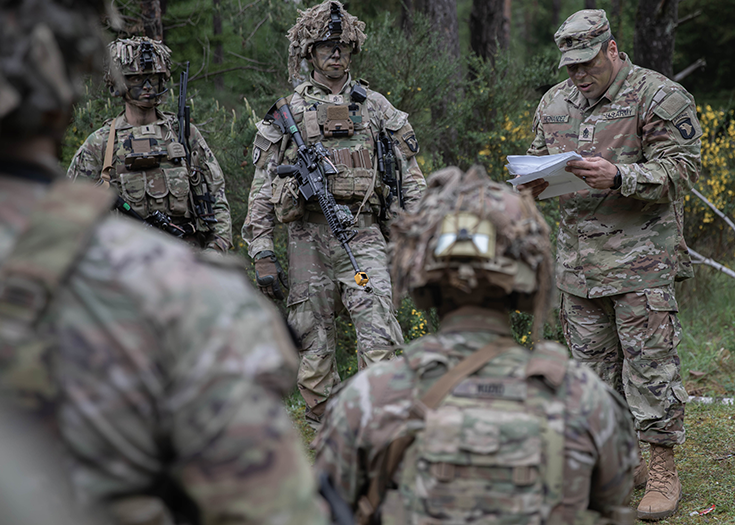
This does not mean that every decision should be delegated. Some actions carry consequences beyond a subordinate’s area of responsibility. The purpose of Mission Command is not to remove control, but to establish in advance where initiative is authorised, where coordination is essential and when restraint is required.
The measure of Mission Command is whether a formation can continue to act within intent when its usual command links are unavailable. That requires preparation in peacetime, not improvisation during combat.
Disconnected by Design
If communications degradation is a foreseeable feature of combat, it must be a routine feature of training. Too often, exercises represent it by ordering soldiers to switch radios off at a known time. This creates inconvenience, but rarely genuine uncertainty. Participants know the disruption is scripted and that higher headquarters remains available.
An adversary will not provide that reassurance. A communications failure may result from terrain, damaged equipment, electronic attack or the destruction of network infrastructure. The commander may not know which explanation is correct, how long the disruption will last or whether adjacent forces face the same problem.
The challenge is not simply that communications may fail; it is that future operations must be designed on the assumption that they will. The United States Army's Multi-Domain Operations concept argues that adversaries will actively contest friendly command-and-control systems across all domains, seeking to disrupt decision-making and isolate subordinate formations from higher headquarters. In such an environment, commanders cannot rely on continuous connectivity to maintain control[2]. Instead, they must create the conditions for subordinate leaders to continue acting effectively despite intermittent communications, degraded situational awareness and rapidly changing circumstances.
Training should therefore be disconnected by design rather than disconnected by script. Subordinate commanders should receive a mission, understand the intent and then encounter unannounced disruptions, changing tactical circumstances and incomplete information. They should be required to make decisions without assuming an immediate opportunity to seek approval. The objective is not to rehearse what happens when a radio fails. It is to develop commanders who are comfortable making decisions with incomplete information and teams capable of continuing the mission without immediate guidance. Mission Command becomes the mechanism through which combat effectiveness is sustained when command-and-control networks are contested.
Three changes would make this practical. First, introduce unpredictable communications degradation during collective training, including partial and intermittent failures rather than only complete radio silence. Second, assess decisions against intent, available information, proportionality and risk, not merely adherence to the original plan. Third, test the actual equipment, command relationships and contingency procedures that formations intend to use in combat.
After-action reviews should ask whether commanders knew their decision boundaries, whether adjacent units could coordinate and whether the formation continued to achieve its purpose. They should also examine whether leaders maintained tempo and initiative despite operating with degraded communications and imperfect information. A force that only trains while connected should not expect to fight effectively when disconnected.
Being disconnected should not be treated as an emergency condition. In future conflict it may be the normal state of battle, and forces should therefore be trained to operate disconnected by design rather than connected by default. Yet preparing commanders to operate without reliable communications addresses only part of the challenge. Emerging technologies are also changing the relationship between information, authority and control.
Robotics, Autonomy and the Paradox of Control
Robotics and autonomous systems are changing what small tactical formations can observe and influence. Uncrewed aircraft, ground systems, distributed sensors and loitering munitions can extend reconnaissance, support logistics and provide options that were previously scarce at lower levels.
Yet more information does not automatically create better command. Live sensor feeds can tempt higher headquarters to intervene in tactical decisions. Subordinates may become conditioned to seek permission because the commander can see the same picture. Systems designed to increase agility can inadvertently reinforce centralisation.
There is also a resilience problem. A formation that relies on persistent feeds, digital targeting and constant coordination may discover that its apparent efficiency is fragile. When those systems fail, the decisive advantage may belong to the commander who understands the mission and can continue with imperfect information.
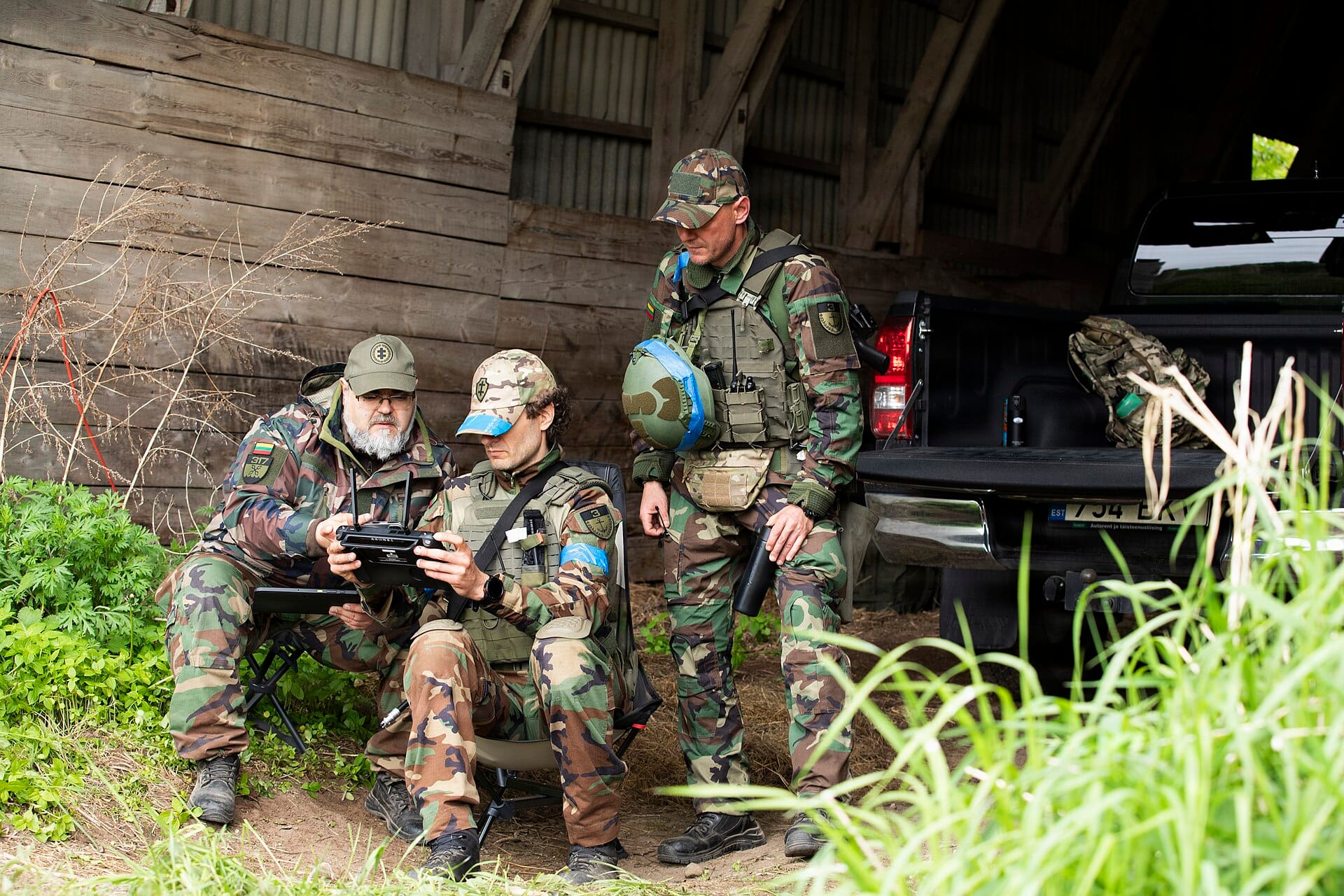
As Frank Hoffman and Andrew D'Amelio argue, advances in artificial intelligence and autonomous systems may transform many aspects of warfare, but they do not remove its enduring nature. War remains a human contest characterised by uncertainty, friction, risk and competing wills[3]. Technology may improve the speed at which information is collected, processed and disseminated, but it cannot eliminate the requirement for commanders to exercise judgement, interpret intent and make decisions under conditions of ambiguity. The temptation is therefore not that machines will replace command, but that organisations may overestimate what technology can reliably provide and underestimate the importance of human initiative when systems are degraded or unavailable.
This has important implications for Mission Command. As autonomous systems proliferate, tactical leaders will possess greater awareness and influence over the battlespace than ever before. At the same time, headquarters will often possess unprecedented visibility of subordinate activities. The challenge for commanders is resisting the tendency to convert access to information into unnecessary direction. Access to a sensor feed does not equate to a better understanding of local context, nor does it change the principle that decisions should be made at the lowest level capable of making them effectively.
Technology should enhance Mission Command, not substitute for it. Clear decision rights, realistic expectations of network availability and training that does not treat digital connectivity as guaranteed, must match its employment. The true advantage offered by robotics and autonomous systems may therefore lie not in enabling tighter control, but in empowering subordinate leaders to act with greater speed, reach and confidence within the commander's intent.
Expanding Battlespace, Expanding Responsibility
The most consequential change may be organisational rather than technological. A platoon equipped with uncrewed sensors and precision effects may be able to detect or influence activity beyond the area it physically occupies. Its tactical decisions can affect neighbouring formations, scarce joint assets and potentially the wider operation.
The war in Ukraine illustrates how closely drones, artillery, electronic warfare and command arrangements now interact. In their 2023 study Meatgrinder, Jack Watling and Nick Reynolds describe Russian artillery adapting towards closer integration of uncrewed aircraft with commanders authorised to apply fires. They also document extensive electronic warfare and the adaptation of command infrastructure to reduce vulnerability.[4] The lesson is not that one army has solved decentralised command. It is that the interaction between sensors, authority, fires and communications is now central to battlefield effectiveness.
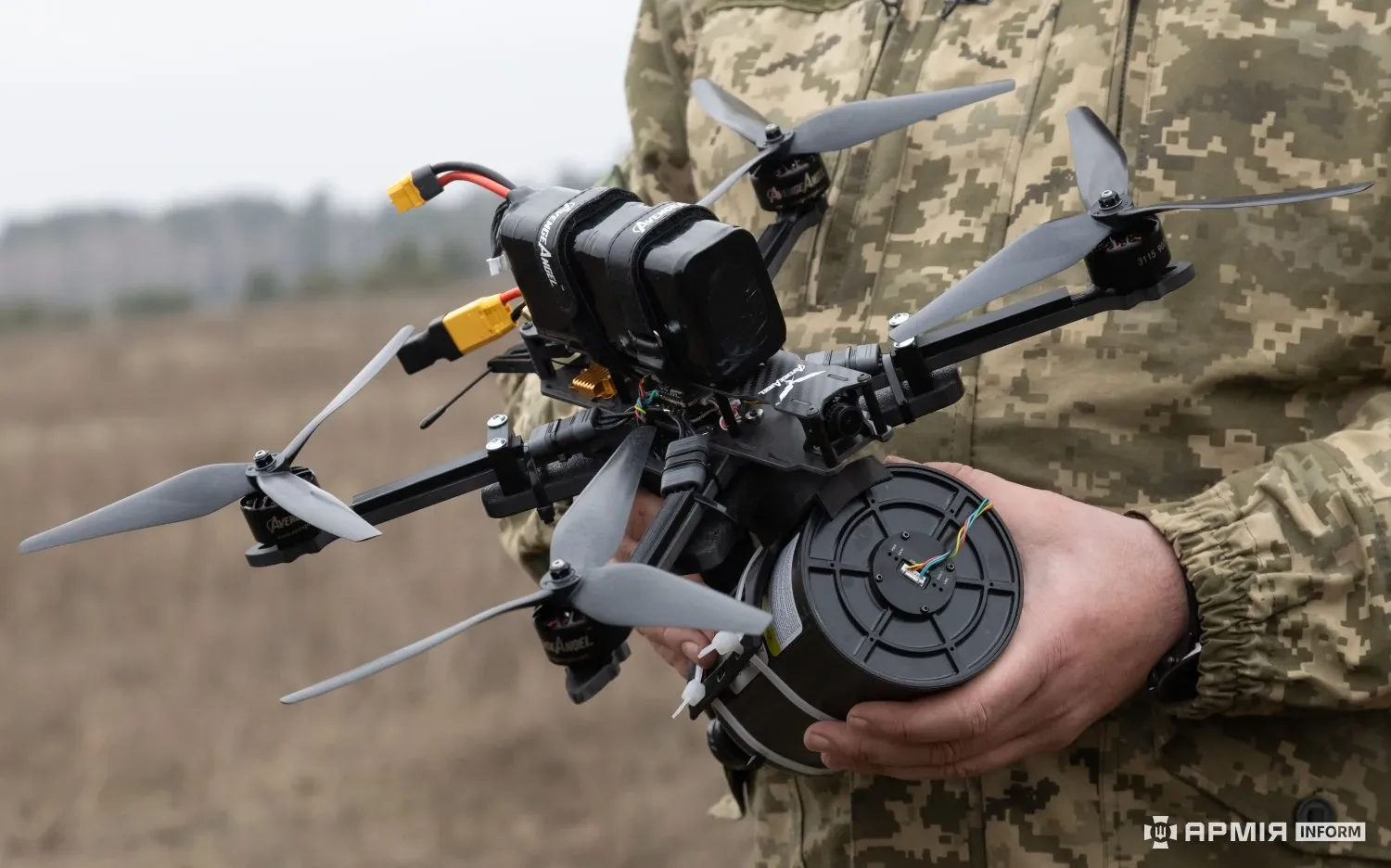
An expanded ability to observe or engage does not, however, confer unrestricted authority. A junior commander may identify a target across a boundary without possessing the legal, tactical or operational authority to prosecute it. Fratricide, escalation, competing priorities and interference with adjacent operations remain real risks. Initiative without a shared understanding of these constraints is not Mission Command; it is a failure of command design.
The solution cannot simply be to centralise every decision. Time-sensitive opportunities may disappear while approvals move through headquarters. Instead, formations should define authorities, control measures, cross-boundary coordination arrangements and escalation thresholds before communications are lost. Commanders must know which decisions they can make, which require coordination and which must be withheld when the necessary information is unavailable.
As capability is pushed down, authority and trust must follow, but so must responsibility, professional mastery and disciplined judgement. A force that gives junior leaders greater tactical reach while retaining approval processes designed for an earlier era, risks losing the very tempo that new technology promises. Ultimately, these challenges cannot be resolved through technology or command arrangements alone; they depend on the competence, judgement and adaptability of those exercising command.
The Human Advantage
Autonomous systems will become more capable, and artificial intelligence will assist with the processing of information. Neither development removes the need for leaders to interpret intent, judge risk and act ethically under uncertainty.
Watling and Reynolds' Stormbreak study of Ukraine's 2023 offensive highlights the importance of staff capacity, realistic collective training and preparing units with the tools and structures they actually employ.[5] These observations reinforce a broader point: effective adaptation is not achieved by acquiring equipment alone. It requires changing how people train, coordinate and make decisions.
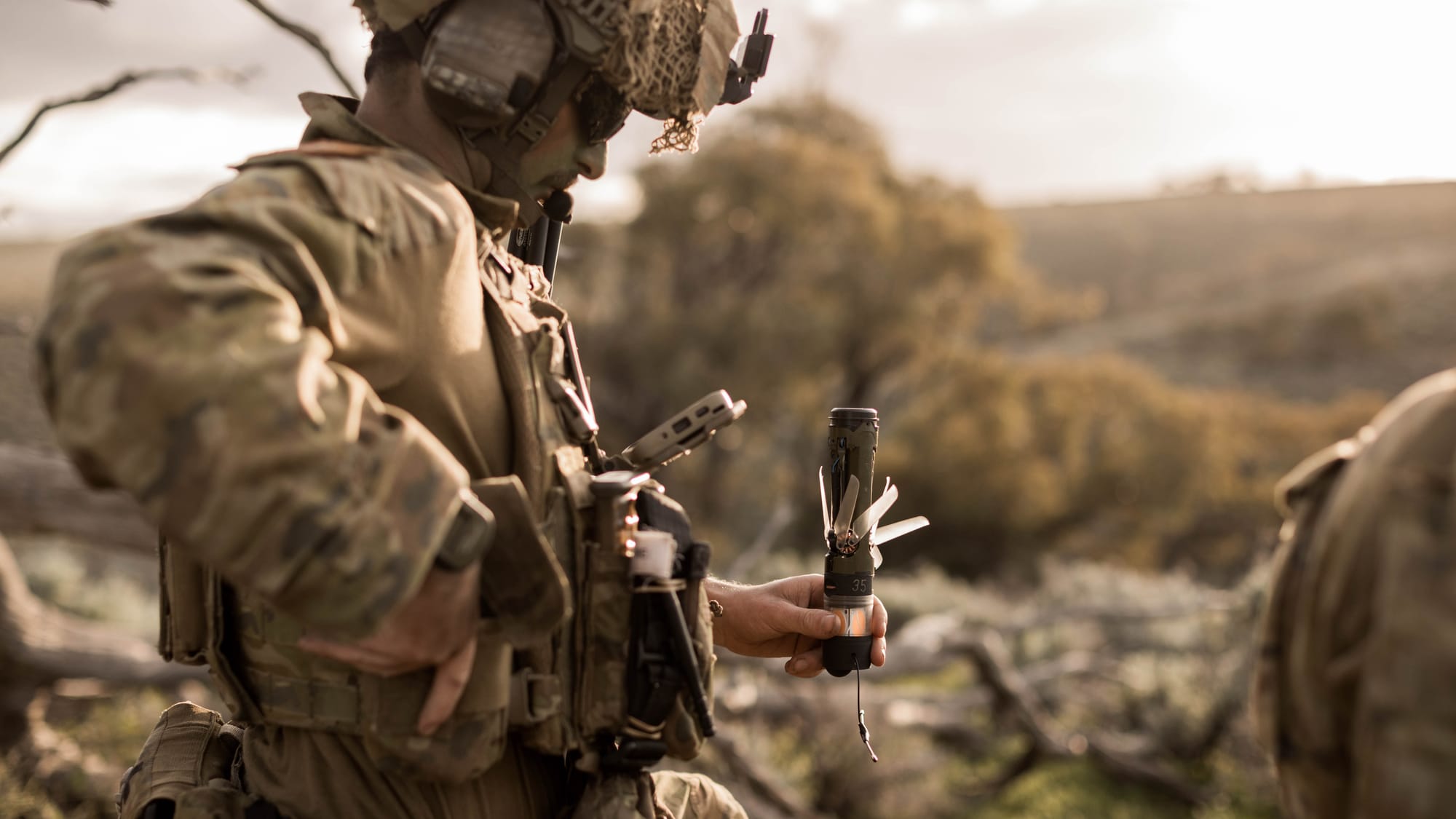
Lessons emerging from the war in Ukraine reinforce this conclusion. Speaking at the NATO Lessons Learned Conference 2024, Ukraine's Deputy Minister of Defence argued that victory belongs to the force that adapts faster, highlighting the importance of smarter approaches rather than simply greater combat power. NATO's lessons-learned community has similarly emphasised the value of rapid learning, continuous adaptation and the ability to implement lessons during conflict rather than after it.[6]
The experience of the war in Ukraine suggests that adaptation has become a decisive battlefield competency. Organisations that rapidly adjust tactics integrate emerging technologies and empower leaders to make timely decisions often prove more effective than those reliant on rigid processes or highly centralised direction. As NATO observers have noted, lessons identified from both successes and failures form the basis for refining strategy and confronting emerging security challenges.⁶ Ultimately, the human advantage lies not in the technology a force possesses, but in its ability to adapt, exercise judgement and maintain the initiative when the conditions of battle change.
Conclusion
The contradiction is increasingly difficult to ignore, we endorse Mission Command as a means of operating amid uncertainty, yet our habits of continuous reporting and immediate approval can undermine the initiative it requires. Electronic warfare makes that contradiction dangerous; robotics and autonomous systems can magnify it by extending subordinate reach while increasing headquarters visibility.
Closing the gap between doctrine and practice requires unpredictable communications degradation in training, clear authorities and boundaries, realistic assessment of decisions, and trust earned through repeated exercise of judgement. Commanders must be able to exploit sophisticated systems without becoming dependent on their constant availability.
A formation cannot practice centralised control every day and expect decentralised initiative on contact. Mission Command must be deliberately cultivated as a combat capability, not merely endorsed as a leadership philosophy. When connectivity fails, the advantage will belong to the force whose commanders already know how to act within intent, accept responsibility and continue the mission, disconnected on contact.
FOOTER
[1] Australian Defence Force, ADF Philosophical Doctrine 0 Series: ADF-P-0 Command (Canberra: Commonwealth of Australia, 2024), 3-4.
[2] U.S. Army Training and Doctrine Command, The U.S. Army in Multi-Domain Operations 2028, TRADOC Pamphlet 525-3-1 (Fort Eustis, VA: TRADOC, 2018), 6-10, 24-33.
[3] Frank G. Hoffman and Andrew D'Amelio, “AI's Impact on War's Enduring Nature,” Orbis 68, no. 1 (Winter 2024): 29-44.
[4] Jack Watling and Nick Reynolds, Meatgrinder: Russian Tactics in the Second Year of Its Invasion of Ukraine (London: Royal United Services Institute, 2023)
[5] Jack Watling and Nick Reynolds, Stormbreak: Fighting Through Russian Defences in Ukraine's 2023 Offensive (London: Royal United Services Institute, 2023).
[6] NATO Joint Analysis and Lessons Learned Centre, NATO Lessons Learned Conference 2024 Magazine (Lisbon: JALLC, 2024), 12, 15.
Photo: www.defence.gov.au